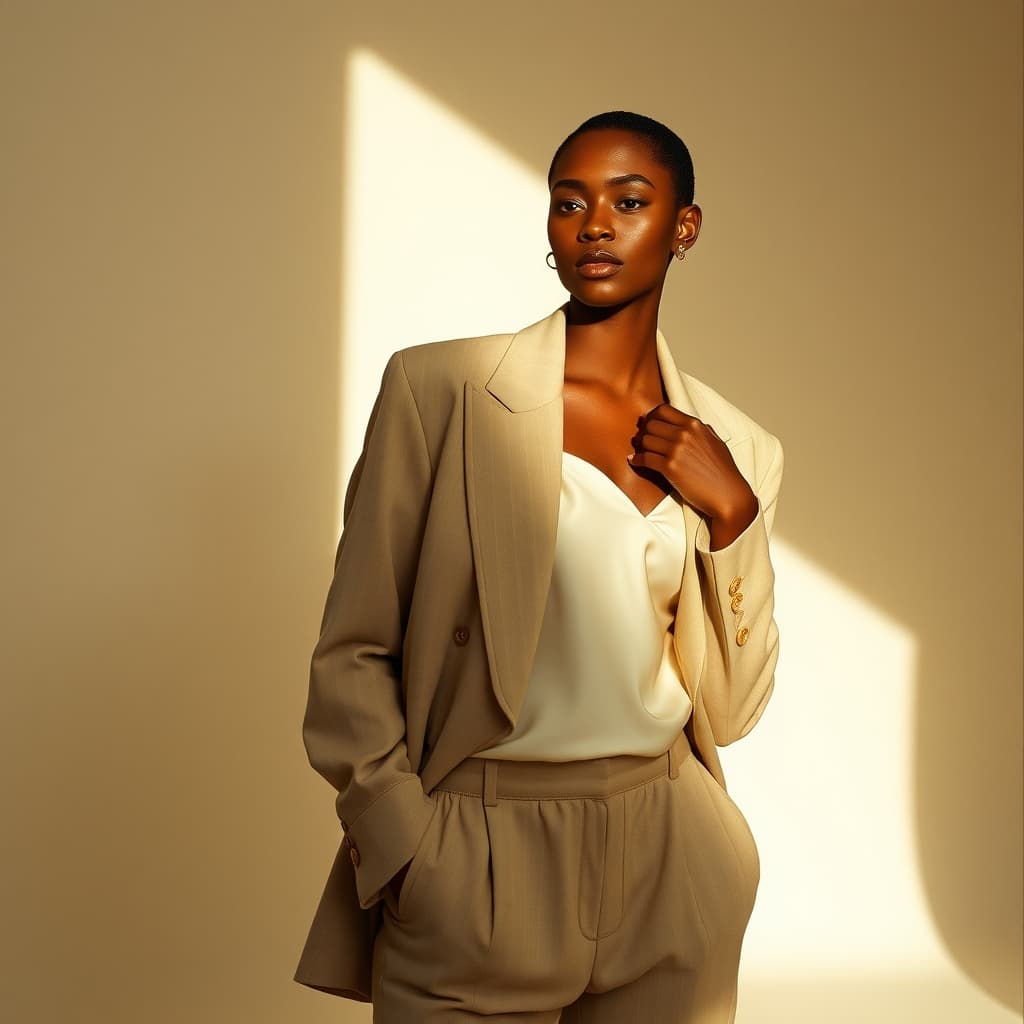
The 20-piece wardrobe has been a Pinterest fixture since about 2014. It is the promise that with the right twenty items, you can dress yourself for any occasion in any weather for a whole season, and never look repetitive. It is a lovely idea. It is only partly true.
What the twenty-piece idea gets right
There is a real principle underneath the claim, and it holds up. Twenty pieces in one coherent palette will produce more usable outfits than sixty pieces in five palettes. This is basic combinatorics. Colour compatibility is doing most of the work.
It also gets three practical things right:
- A small wardrobe forces you to keep the pieces well. You wash them properly, hang them properly and repair them rather than replacing.
- A small wardrobe makes decisions faster. Fewer choices to sort through in the morning.
- A small wardrobe reveals which pieces you actually love, because there is no place to hide.
What it gets wrong
The version that goes viral usually skips the shoes, coats, workout kit, formal pieces, swimwear, pyjamas, socks and underwear. Sometimes it also skips bags. If you count those honestly, the "twenty pieces" is often forty-five. That is not a small wardrobe. That is a normal one with better marketing.
It also assumes your life has one register. It usually does not. A parent of small children, a hospital nurse, a professional cyclist, a wedding-hopping stylist and a professor of ceramics do not have the same twenty pieces, and they cannot swap. The universal capsule is really the capsule of the person who invented it, which is fine as inspiration and misleading as instruction.
A twenty-piece capsule that actually holds up
Here is a version scoped to "a working season, three days in an office, two days at home, weekends normal". You already own most of these.
Bottoms (5)
- Wool trousers, straight, in the primary colour.
- Cotton trousers or chinos, in the secondary colour.
- Dark rinse jeans, straight.
- One skirt or one wide-leg trouser (whichever suits your body better).
- One pair of casual trousers you would wear on a train.
Tops (7)
- Two crew-neck knits, one heavier, one finer.
- Two long-sleeve shirts (one white, one in your secondary colour).
- Two tees (one long-sleeve, one short-sleeve, cotton not synthetic).
- One roll-neck.
Outer (3)
- One jacket for the shoulder seasons (unlined wool or heavy cotton).
- One proper winter coat.
- One casual overshirt or cardigan for the warmer end.
Evening or occasion (2)
- One dress or one tailored blazer that works with the tailored trousers.
- One less formal shirt or blouse that could go to dinner.
Rest (3)
- One layering vest or gilet.
- One weekend jumper you can be seen in.
- One piece that has no rule attached, that you always love wearing.
Twenty pieces. Add shoes (three pairs), coats you already counted, bags, workout kit, formal pieces, sleep and swim as separate categories, and you have a functioning wardrobe.

Two rules that make it work
Rule one: pick a two-colour palette and stick to it. If your primary is navy, your trousers, most of your knits and one of your coats live in navy. Your secondary is stone; that carries the shirts, the tee, one knit. Anything outside those two colours is an occasion piece, not a foundation piece.
Rule two: no piece is allowed in if it does not go with at least half of the others. If you buy a burgundy corduroy trouser, it needs to work with three of your tops and two of your knits before it earns a hanger. Otherwise it becomes a beautiful outlier that costs you a slot.
The honest verdict
A strict twenty-piece wardrobe is more of a design exercise than a way to live. But the underlying idea, that a small, palette-coherent core does most of the work, is true and useful. Aim for a working core of about twenty pieces and let everything else be the specialised kit around it. Your morning gets simpler, your cost per wear drops, and your wardrobe finally feels like it was chosen by one person.