
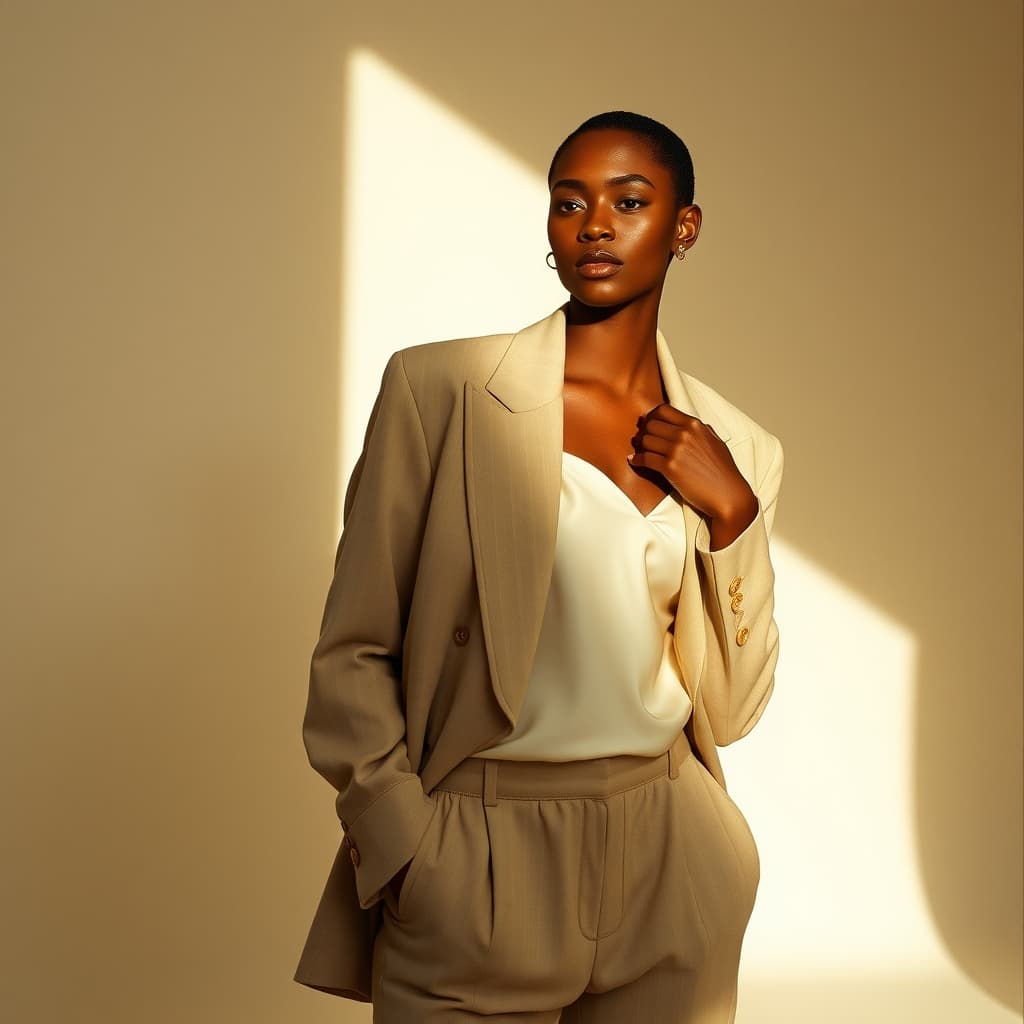
There was a time when a trend lasted a season. Then it lasted the length of a fashion month. Now, in the sped-up cycle we are all inside, a trend can arrive on a Monday and be over by the following Sunday. This is not a moral point about fast fashion; it is a practical observation about how you make choices.
A wardrobe organised around trends is a wardrobe permanently under construction. It never settles. It also never wears its pieces to a low cost per wear, because the pieces are asked to be relevant, not to be durable.
The one useful thing about trends
Trends are a coordination signal. When lots of people are wearing something, the market floods with that item, which means it is cheap, well-made and available in many variants. A trend is useful for exactly the length of that window, if the piece happens to also work with the rest of your wardrobe.
The mistake is treating the trend itself as the reason. "Everyone is wearing them" is not a reason to buy trousers; it is a market condition. You should still ask the other questions: do these go with what I already own, will I wear them in two years, is the cost per wear likely to be low.
Dressing for a longer horizon
The alternative is to plan a wardrobe for the next five years, not the next three months. This does not mean predicting the future. It means picking pieces that will still make sense to a slightly older, slightly wiser version of you.
1. Shapes over motifs
A straight-leg wool trouser will be a straight-leg wool trouser in five years. A specific print might look dated by autumn. Trust the shape; be careful with the motif.
2. Neutrals over statement colours
The foundation of the wardrobe should live in colours that pair with each other and with future purchases. Save the statement colour for the one accent piece that is allowed to date.
3. Better fabrics, fewer pieces
A £300 wool coat that lasts eight winters is cheaper per wear than three £120 wool-blend coats that go through the wash and pill. The upfront cost feels bigger. The five-year cost is smaller.
4. Buy for the piece you have to replace, not for the piece that catches your eye
The most durable buying rule I have found. Keep a small list of the pieces that are wearing out. When one gets to the end of its life, replace it deliberately. The list is your shopping trip. Nothing outside the list gets to be bought.

What happens to the trend-shaped pieces already in your wardrobe
You do not have to bin them. Keep the ones you actually still like wearing. Move the ones you no longer wear into a box, and check the box in twelve months. Trends do come back, sometimes; more often, the piece you moved out no longer suits you and you were right to let it go.
Do not buy replacements for the trend pieces you liked. The point is not to keep a version of the last five years of trends in your wardrobe. The point is to have a wardrobe that is not shaped by the last five years of trends at all.
The quiet advantage
A wardrobe on a longer horizon is calmer to live inside. You are not chasing. You are not comparing your wardrobe to a moving target. You are not spending money on pieces that will be silently uncool in six weeks. You are wearing your clothes, all of them, more often. That is really all this is about.
