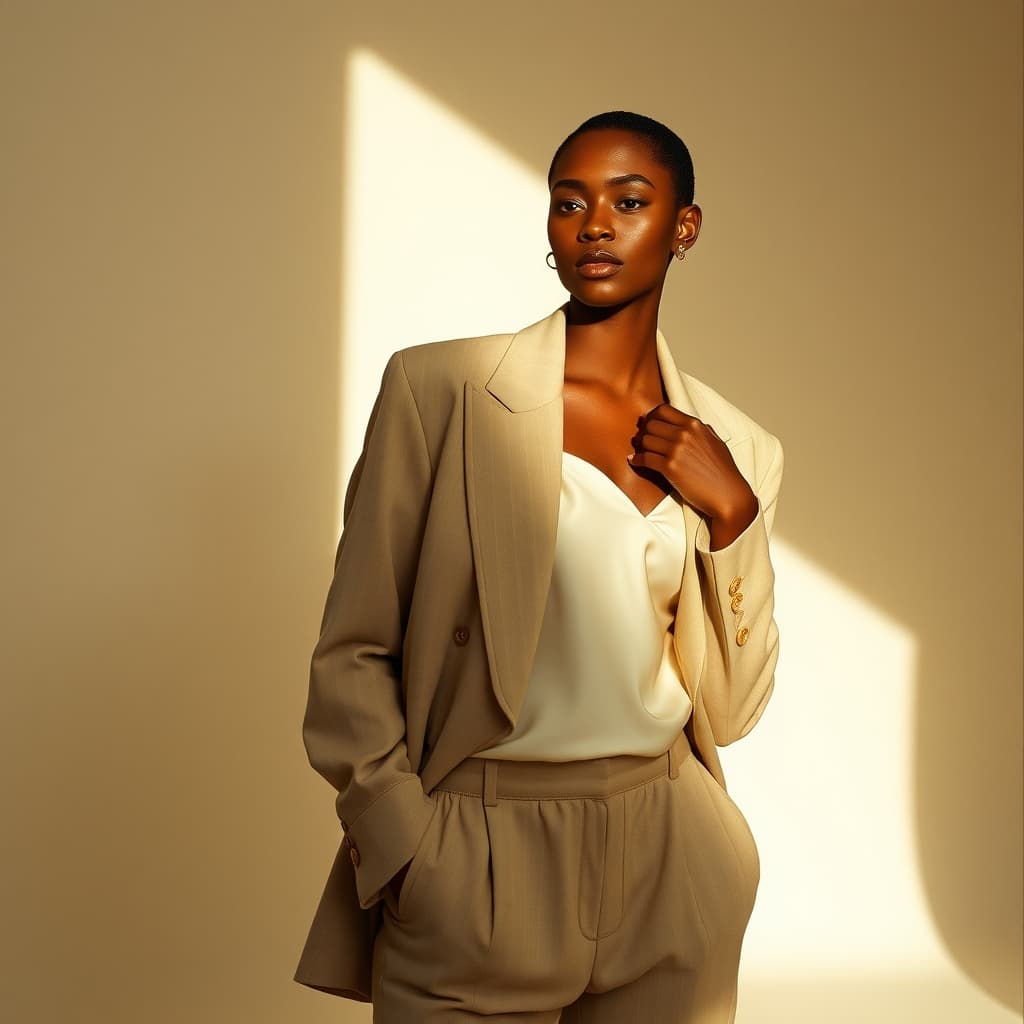
When people say they hired a stylist, they might mean any of six things. This is confusing, because it means the same word is used for a service that costs £75 and a service that costs £4,000, and the outcome is completely different.
This is a short taxonomy, from someone who has hired one, considered hiring another, and spent a lot of time reading their brochures. It is meant to help you work out what you would actually be getting, and whether any of it is what you need.
The six things a "stylist" might be doing
1. Wardrobe audit
They come to your house, they go through your wardrobe with you, they group pieces, they identify what works and what does not. You end the session with a list of pieces to keep, pieces to donate, and pieces to try in new combinations. Usually one to three hours; commonly £150 to £400.
2. Shopping
They take you shopping, or they shop for you and bring items to your home. The stylist has relationships with brands and can pull pieces you would not find on your own. Often earns a commission from the brands, which shapes the recommendations. Half-day rates commonly £300 to £800, sometimes more.
3. Colour and body-shape consultation
A more advisory service; often the twelve-season or four-season colour analysis, plus a body-shape session with recommendations for cuts and silhouettes. You leave with a printed palette and a lookbook. £200 to £500.
4. Editorial or photoshoot styling
A different profession, really. The stylist works with a photographer to build looks for a shoot; pieces are borrowed from PR showrooms and returned. Almost never relevant unless you are the subject of a shoot or you run a magazine.
5. Personal shopping service inside a department store
Free at Selfridges, Harrods, Fenwick, and Liberty above a certain spend. Fine for one-off events. The stylist's job is to sell you clothes; that does not make them dishonest, but the incentive is clear.
6. Digital-only outfit planning
A newer category. A human, on a subscription, builds outfits from your existing wardrobe and sends them over. Sometimes cheaper than in-person work; sometimes a flat monthly fee. £30 to £120 a month.
Which of these do you actually need?
The honest answer is: most people, most of the time, do not need any of the six. What they need is a way to see their own wardrobe more clearly. That is a job that any good stylist can do, and that a decent app can do for less.
The exceptions are worth naming, because when a stylist is the right answer, they are really the right answer.
- You are about to be in the public eye (a new role, a book tour, a wedding, a keynote). A shopping session with a good stylist will save you weeks.
- Your body has changed significantly and you do not know what suits you any more. A body-shape consultation can shortcut months of trial and error.
- You have plenty of money and no time, and you would rather pay a person to solve the problem than think about it. This is a legitimate use of money.
- You want a specific colour analysis and you want the printed palette to carry with you when you shop.

What a stylist cannot do
They cannot get you to wear the pieces they select every day of the year. They can pick beautifully; you have to build the habit of reaching for the pieces. This is why the follow-through is usually worse than the initial session.
They also cannot make your wardrobe visible to you. The audit shows you a lot, but a week after they leave, the pieces slip back out of view. The visibility problem is not solvable by a person; it is solvable by a system, however light, that keeps your wardrobe present in your head.
What FitMatch does and does not do
The app is not a stylist. It does not do a colour analysis, it does not consult on body shape, and it does not go to Selfridges with you. What it does is keep your wardrobe visible, tag it for you, and hand you outfits when you cannot decide. If those are the two things you were paying a stylist for, the app can plausibly replace them. If you were paying for taste or for expertise, the app is not that.
The right answer for most people is probably: an app for the daily visibility, a stylist once every two or three years for a big audit or a milestone. Both together, not either alone.